





Protecting your pet against ticks and fleas
Your dog or cat loves being outside. As a pet owner, you naturally want your pet to be happy. That's why you regularly let your dog or cat go outside.
Do you want to make sure your pet stays healthy? Then you need to offer your pet some extra protection during its outdoor trips. Ticks and fleas are always lurking. How do you protect your pet from these annoying insects? You can read all about it in this e-book.
Your dog or cat loves being outside. As a pet owner, you naturally want your pet to be happy. That's why you regularly let your dog or cat go outside.
Do you want to make sure your pet stays healthy? Then you need to offer your pet some extra protection during its outdoor trips. Ticks and fleas are always lurking. How do you protect your pet from these annoying insects? You can read all about it in this e-book.
Tip: we have written an updated article about sneezing and scratching in spring with the latest tips on allergies in dogs and cats.
What are ticks?
Ticks are spider-like insects that mainly live in forests, bushes, and (tall) grass. Ticks feed on the blood of humans and animals. They actively seek out so-called hosts, to which they can attach themselves. This can be a wild animal, but also a dog or a cat.
A tick that has not yet engorged itself with blood is almost imperceptible. Once a tick has engorged itself, the insect is more visible and palpable. You often notice that your dog or cat has a tick when you pet your pet. You suddenly feel a small lump in the fur.
How does your dog or cat get a tick?
Ticks are often hidden in plants and bushes close to the ground. If your dog or cat walks past such a plant or bush, the tick can drop onto your pet. The tick then searches for a piece of skin to bite into.
Tip: has your dog or cat been outside? Always check the animal for ticks. Even if your dog or cat has only been in your own garden, because ticks can also be found there. Primarily check the areas behind the ears, in the groin, and in the armpits. This is where ticks prefer to settle.
What are ticks?
Ticks are spider-like insects that mainly live in forests, bushes, and (tall) grass. Ticks feed on the blood of humans and animals. They actively seek out so-called hosts, to which they can attach themselves. This can be a wild animal, but also a dog or a cat.
A tick that has not yet engorged itself with blood is almost imperceptible. Once a tick has engorged itself, the insect is more visible and palpable. You often notice that your dog or cat has a tick when you pet your pet. You suddenly feel a small lump in the fur.
How does your dog or cat get a tick?
Ticks are often hidden in plants and bushes close to the ground. If your dog or cat walks past such a plant or bush, the tick can drop onto your pet. The tick then searches for a piece of skin to bite into.
Tip: has your dog or cat been outside? Always check the animal for ticks. Even if your dog or cat has only been in your own garden, because ticks can also be found there. Primarily check the areas behind the ears, in the groin, and in the armpits. This is where ticks prefer to settle.
Is your dog eating poop? Read our article to find out the reasons and how to prevent it!

Are ticks dangerous?
Yes, ticks can be dangerous. For example, your dog or cat can develop an infection from a tick bite. This infection can even lead to an abscess. And if there are multiple ticks on your dog or cat? Then anemia can even occur. Fortunately, this is not very common.
What makes ticks so dangerous is that these insects can transmit nasty diseases. This happens within 24 to 48 hours after the tick bite. The most common disease caused by ticks is Lyme disease. As many as 40 percent of ticks are infected with this disease. If your pet has Lyme disease, the animal will develop a high fever. Joint inflammation can also occur. Organ failure also occurs in animals with Lyme disease. This disease can therefore be very dangerous.
What are fleas?
Another creature in the category of annoying insects is the flea. Fleas are blood-sucking parasites that are common in dogs and cats. In dogs, fleas cause itching and skin inflammations. These skin inflammations occur when the dog bites its skin to stop the itching. In cats, fleas cause itching, skin inflammations, and even baldness.
How does your dog or cat get fleas?
Your dog or cat can get fleas by going to a place where many fleas are present. An infected animal can also infect your dog or cat. You can even bring fleas home without realizing it. Because if you step on flea eggs, they can stick to your shoes. This way, you unintentionally bring the eggs inside. This can happen, for example, if you have just walked with your dog or cat.
Are ticks dangerous?
Yes, ticks can be dangerous. For example, your dog or cat can develop an infection from a tick bite. This infection can even lead to an abscess. And if there are multiple ticks on your dog or cat? Then anemia can even occur. Fortunately, this is not very common.
What makes ticks so dangerous is that these insects can transmit nasty diseases. This happens within 24 to 48 hours after the tick bite. The most common disease caused by ticks is Lyme disease. As many as 40 percent of ticks are infected with this disease. If your pet has Lyme disease, the animal will develop a high fever. Joint inflammation can also occur. Organ failure also occurs in animals with Lyme disease. This disease can therefore be very dangerous.
What are fleas?
Another creature in the category of annoying insects is the flea. Fleas are blood-sucking parasites that are common in dogs and cats. In dogs, fleas cause itching and skin inflammations. These skin inflammations occur when the dog bites its skin to stop the itching. In cats, fleas cause itching, skin inflammations, and even baldness.
How does your dog or cat get fleas?
Your dog or cat can get fleas by going to a place where many fleas are present. An infected animal can also infect your dog or cat. You can even bring fleas home without realizing it. Because if you step on flea eggs, they can stick to your shoes. This way, you unintentionally bring the eggs inside. This can happen, for example, if you have just walked with your dog or cat.
For example, do you notice that your dog barks a lot and do you want to train your dog to stop barking? It can also be a sign of having ticks.
Are fleas dangerous?
Fleas are generally not dangerous. However, the insects are very annoying for your pet. Dogs or cats with fleas experience intense itching. To reduce the itching, they scratch and bite their own skin. This can lead to inflammations and wounds. Very unpleasant!
For kittens and puppies, fleas can indeed be dangerous. A severe flea infestation can cause anemia in young animals.
How to protect your pet against ticks and fleas
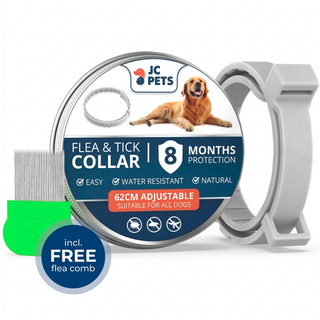
Do you want to prevent your beloved pet from getting ticks and fleas? Then you need to actively protect the animal against these annoying insects. You do this with a flea collar for dogs and cats.

The JC Pets Flea and Tick Collar
The flea collar for cats and dogs from JC Pets protects your pet for 8 months against fleas, ticks, and other pests. The collar does this by repelling and killing pests with various essential oils. When your dog or cat wears the collar, the essential oils spread directly over the animal's fur. This instantly protects your pet, 24 hours a day, 7 days a week.
An odorless solution
Many people complain that flea and tick collars smell bad. With the JC Pets flea and tick collar, you don't have to worry about this. This collar does not work with smelly chemicals and toxins, but with odorless oils. This means you won't experience any unpleasant odors.
A pet-friendly protector
The JC Pets flea and tick collar is 100 percent pet-friendly. While many flea and tick collars are uncomfortable, this is not the case with the JC Pets flea and tick collar. This collar is adjustable and can therefore be perfectly fitted to your pet's neck. You choose how much space you leave between the neck and the collar. We recommend leaving about 2 fingers of space.
Ordering the JC Pets Flea and Tick Collar
Do you want to optimally protect your pet against those annoying ticks and fleas? Then order the JC Pets flea and tick collar. With this collar, you can be sure that your beloved pet will be 100% protected against annoying pests. The collar offers 8 months of protection, 24 hours a day, 7 days a week.
1 comment
Goed artikel! Wat ik baasjes ook altijd aanraad: vergeet de omgeving niet te behandelen. 95% van een vlooienpopulatie zit niet op je huisdier maar in huis — als eitjes, larven en poppen in tapijt en kussens. Dagelijks stofzuigen en beddengoed wassen op 60 graden maakt een enorm verschil. Diatomeeënaarde (voedselkwaliteit) is ook een fijne natuurlijke aanvulling: het werkt puur mechanisch tegen vlooien, zonder chemie, en vlooien kunnen er geen resistentie tegen opbouwen.