



Cleaning the litter box is part of owning a cat, as cats are known as the ultimate clean freaks of the animal kingdom. When it comes to their litter box, they rely entirely on you. And let's be honest: cleaning a litter box isn't the most enjoyable task, but it is important for a happy cat and a fresh home.
In this article, you'll find everything you need to know about cleaning the litter box, how often to change it, handy cleaning tips, and answers to frequently asked questions. This will make changing the litter box much easier and more pleasant – for both you and your cat.
Why is a clean litter box so important?
Cats are naturally very hygienic and sensitive to odors. For many cats, a dirty litter box means it's time to relieve themselves elsewhere (and you want to prevent that). A clean litter box not only prevents unpleasant odors in your home but also health problems such as bladder infections, stress, or even inappropriate elimination. Do you want to know more about encouraging good litter box habits? Then be sure to check out our tips for using a litter box.
How often to change the litter box: the ideal routine
Many owners wonder: how often should you change the litter box? The answer is quite simple: a little bit daily, and completely regularly. Scoop out feces and clumps daily. If you have multiple cats, it's wise to do this two to three times a day. Additionally, at least once a week (or once every two weeks for clumping litter), replace the entire litter and clean the box thoroughly. If you use non-clumping litter, do this weekly. This keeps the box fresh and prevents your cat from seeking relief elsewhere.
How to clean the litter box: step by step
Cleaning the litter box is important for your cat's well-being and for a fresh home. Follow these steps to thoroughly clean the litter box, based on the best advice:
-
Daily removal of feces and urine clumps
Use a litter scoop to remove poop and clumps from the box daily. This prevents unpleasant odors and keeps the box fresh longer. -
Empty the box completely
At least once a week (or once every two weeks for clumping litter), discard all cat litter. Use a garbage bag and also remove caked-on residue with a paper towel or brush. -
Clean the box with warm water
Rinse the box thoroughly with hot water. You can use a mild soap or some baking soda, but avoid aggressive cleaning agents like bleach, chlorine, or strong-smelling all-purpose cleaners, as these can deter your cat. -
Optional: use vinegar for stubborn residue
If there is residue or strong odors, let a layer of vinegar soak for a while, then rinse well with water and dry the box thoroughly. -
Let the box dry completely
Damp boxes cause clumps and unpleasant odors. Always dry the box thoroughly before adding new litter. -
Fill the box with fresh cat litter
Put a layer of at least 5 centimeters of new cat litter in the dry box. This allows your cat to dig properly and keeps the box clean longer. -
Return the box to its familiar spot
Place the clean litter box back in the spot where your cat is used to using it. This will make your cat feel safe and secure.
How often should you completely change the litter box?
Completely changing the litter box means: removing all litter, cleaning the box, and refilling it. For clumping litter, once every two weeks is usually sufficient, provided you scoop daily. If you use non-clumping litter, do this weekly.
Do you have multiple cats or a cat with sensitive bowels? Then more frequent changes may be necessary. Pay close attention to your cat's behavior: if your cat suddenly urinates outside the box, it's time for an extra cleaning.
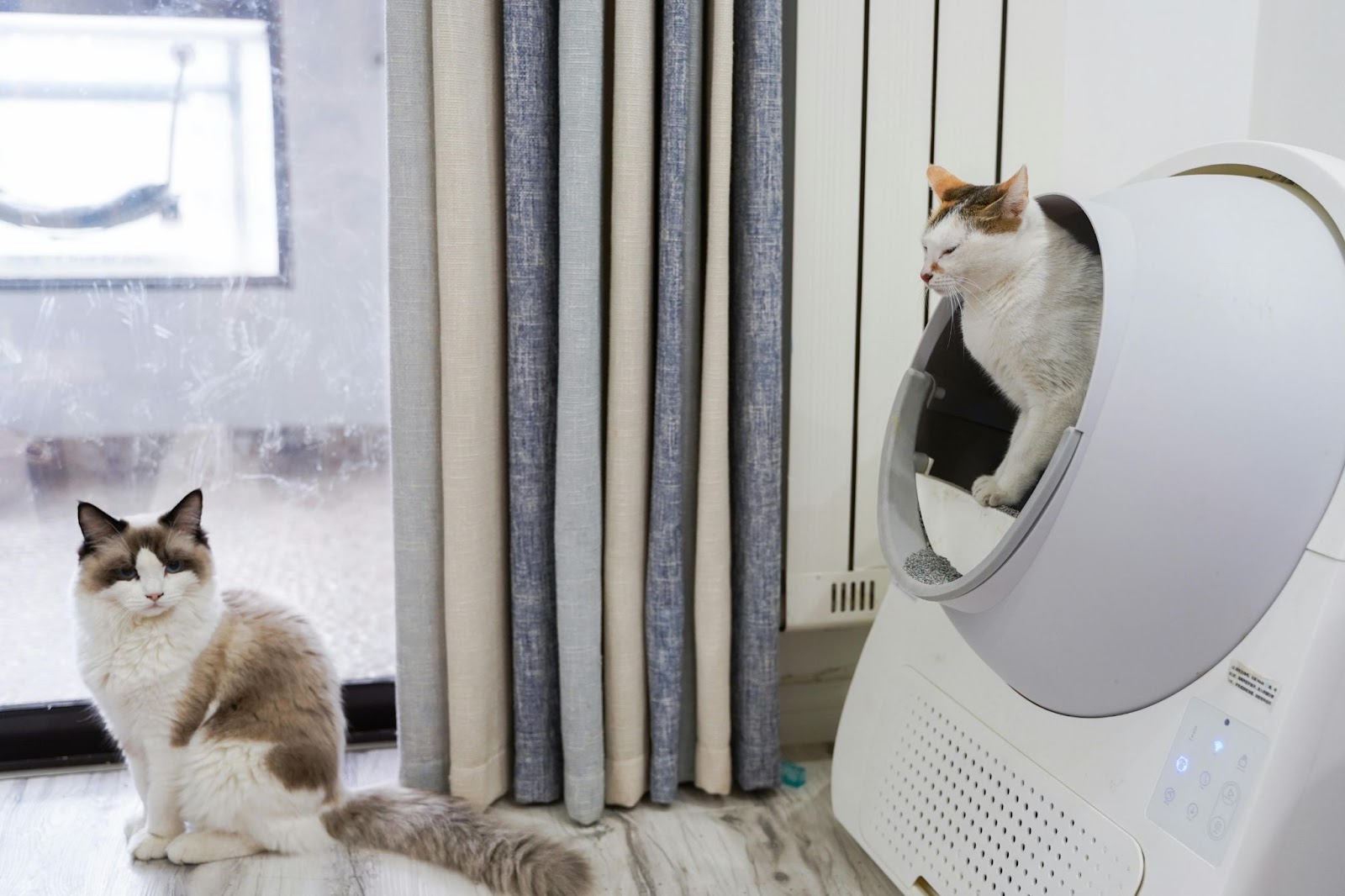
Why choose an automatic litter box?
In addition to the rise of open, closed, and stainless steel litter boxes, more and more cat lovers are choosing an automatic litter box. These modern litter boxes offer advantages such as a sleek and contemporary design, allowing them to fit beautifully into any home. The biggest plus? No more scooping poop! Thanks to the self-cleaning system, the box is automatically kept clean, which is not only time-saving but also pet-friendly and safe for your cat.
Furthermore, automatic litter boxes are often equipped with an odor neutralizer, ensuring that unpleasant smells have virtually no chance and your home stays fresh. The ease of use and hygiene make the automatic litter box an ideal choice for anyone who wants to make cleaning the litter box as easy as possible, without compromising on comfort and appearance.
Litter box cleaning and popular cat breeds
Did you know that some cat breeds are more sensitive to hygiene or stress around the litter box? For example, Maine Coons and Ragdolls are often very clean, while a Bengal loves to dig. Do you want to know which breeds are popular and which cats best suit your household? Then check out our list of popular cat breeds.
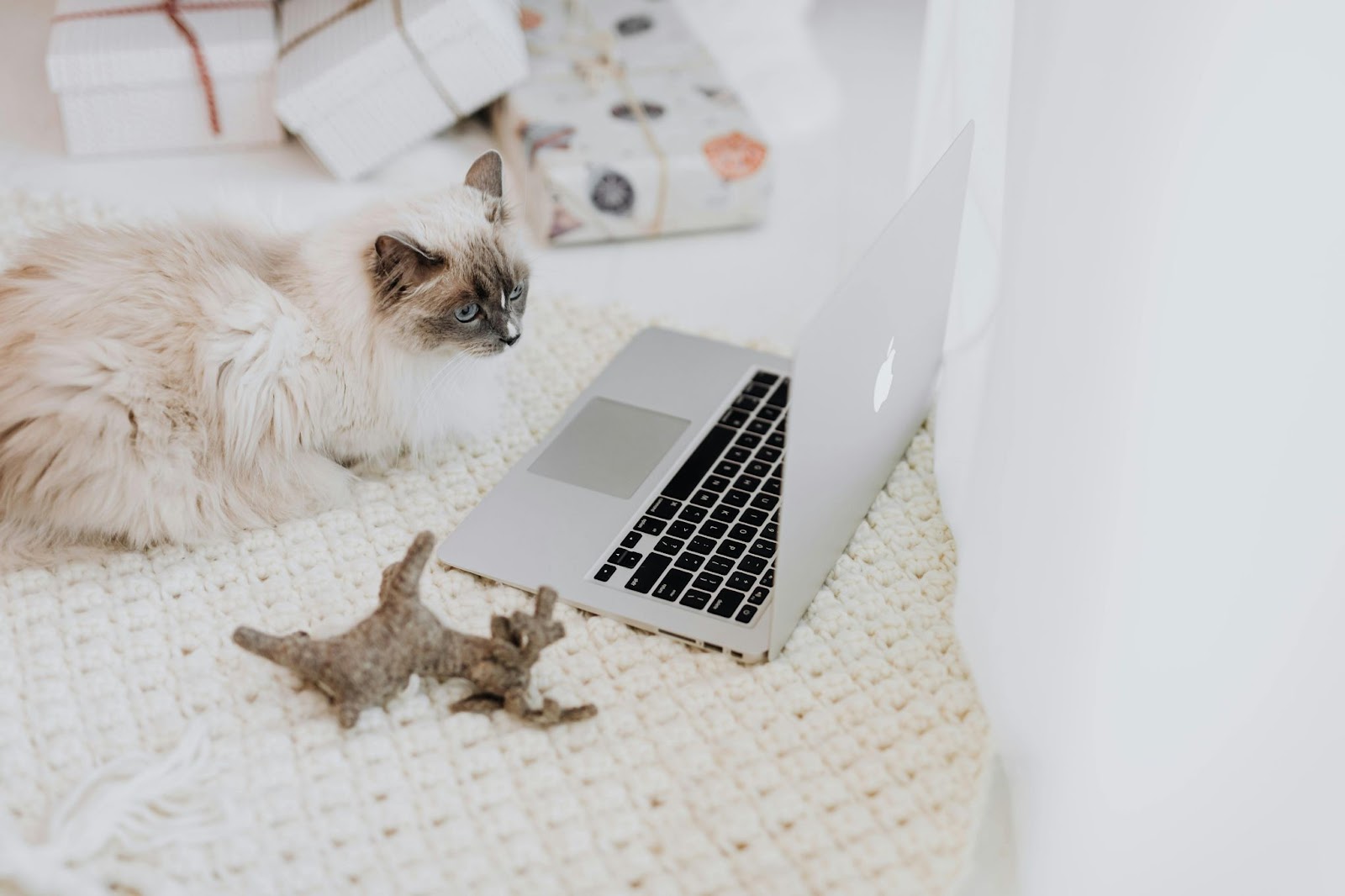
Common mistakes when cleaning the litter box
One of the biggest mistakes is not cleaning enough. Cats are particular, and a dirty box often leads to accidents outside the box. Also, using aggressive cleaning agents can cause problems: these smells are not only unhealthy but also make the box unappealing to your cat. Finally, it's often forgotten to dry the box thoroughly before putting in new litter. A damp box leads to clumps and unpleasant odors more quickly.
Extra cleaning tips for a fresh litter box
-
Always use hot water and, if necessary, a little baking soda or mild, unscented soap for thorough cleaning. Baking soda is ideal for neutralizing stubborn odors and ensures the box becomes truly fresh.
-
Always rinse the litter box thoroughly with clean water after cleaning, so that no cleaning agent remains. Residues of soap or baking soda can be unpleasant for your cat.
-
Use a separate brush or sponge that you only use for the litter box to prevent cross-contamination.
-
Let the box dry thoroughly before adding new litter. A dry box prevents new litter from sticking to the bottom and helps against unpleasant odors.
-
Avoid aggressive cleaning agents such as chlorine, ammonia, or strongly scented all-purpose cleaners. These can not only be harmful to your cat but also make the box unappealing due to the smell.
-
For extra freshness, you can sprinkle a thin layer of baking soda at the bottom of the litter box before adding the litter. This helps to neutralize odors longer, but use it sparingly and always at your own risk.
-
Ensure adequate ventilation in the room where the litter box is located so that any odors dissipate faster.
Finally: a fresh litter box, a happy cat
A clean litter box is important for your cat's well-being and for a fresh home. By scooping daily and cleaning thoroughly weekly or bi-weekly, you prevent unpleasant odors and litter box issues.
Whether you choose a traditional, self-cleaning, or automatic litter box, the most important thing is a routine that suits both you and your cat. With the right approach and attention, cleaning the litter box becomes a small effort, and your cat remains happy and healthy.