















Every dog owner recognizes the moment: your dog just can't seem to settle down. He paces back and forth, lies down and gets up repeatedly, pants for no clear reason, and sometimes even looks at you questioningly. When your dog is restless, it often feels helpless. You want to help, but you don't always know how.
For new owners, this is extra nerve-wracking. You don't know your dog inside out yet and might wonder if this is normal behavior or if something is wrong. In this article, we'll guide you step-by-step through the possible causes of restlessness, what you can do yourself, and when you should take action.
What do we mean by a restless dog?
Restlessness can manifest in many ways. Sometimes it's subtle, sometimes it's obvious. Think of a dog that is restless and won't lie down, keeps changing spots, or seems constantly alert. Other dogs might pant, whine, or constantly seek attention.
A dog acting strangely is certainly not a diagnosis, but it's often the first feeling owners have. You see behavior that deviates from normal, without being able to pinpoint why. That gut feeling is important to take seriously.

Physical causes of restlessness
One of the first things to consider with restlessness is physical discomfort. Pain, itching, or an internal ailment can prevent a dog from relaxing.
For example, a restless dog that pants might be experiencing pain, stomach problems, or even a developing fever. If, in addition, a dog pants a lot and is restless, without it being hot or him having just exercised, that's a signal to be alert.
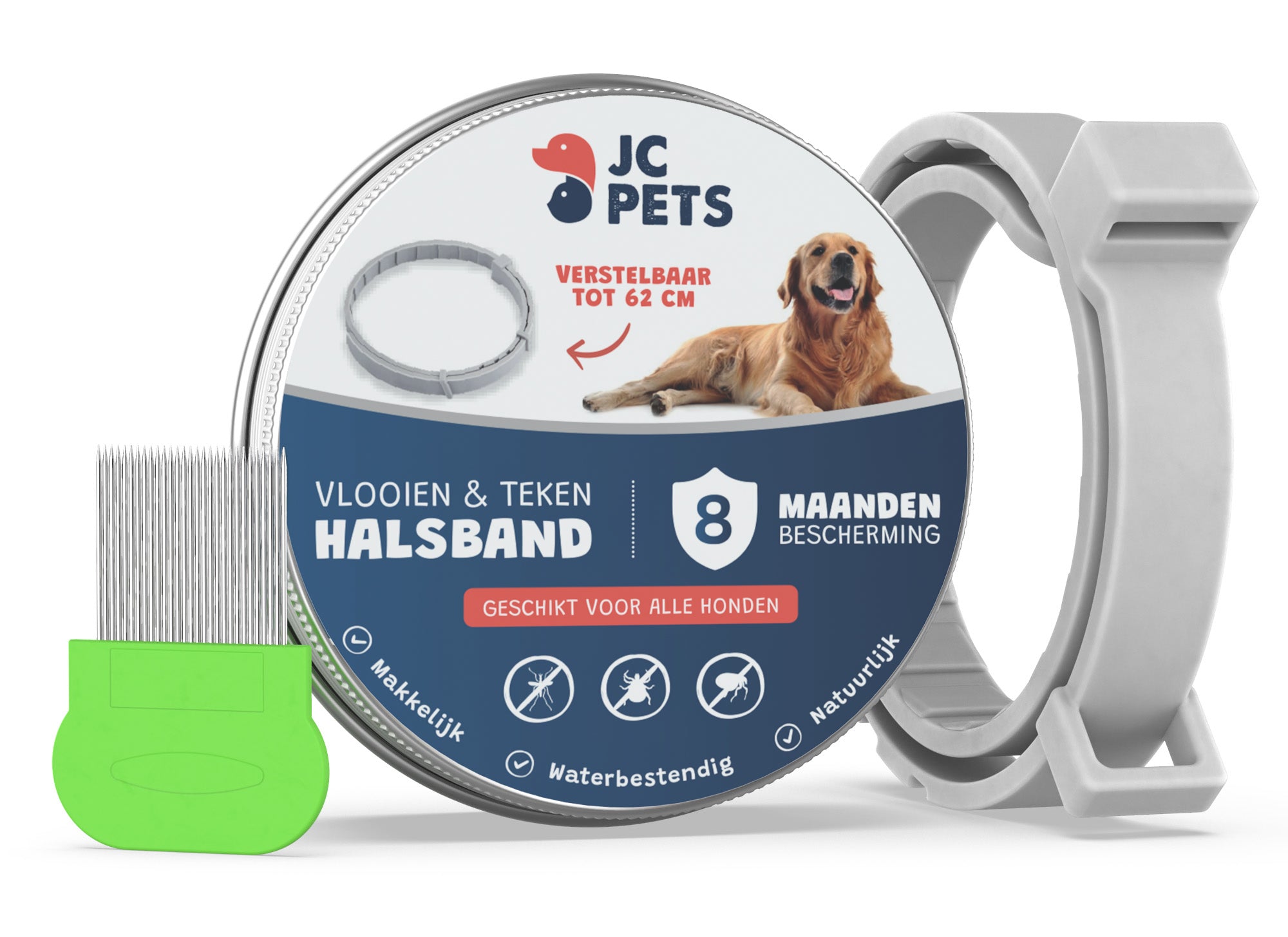
Parasites can also play a role. Fleas or ticks cause constant itching, which makes rest impossible. Prevention with a flea collar for dogs can help rule out these types of causes.
Mental restlessness and stress
Not all restlessness comes from the body. Stress is a common cause, especially in dogs that are sensitive or still adjusting to their environment. Changes such as moving, new family members, or a different daily routine can have a big impact.
A dog experiencing stress might express it by, for example, a dog constantly pacing or continuously following you around. This behavior is often seen in the evening, when the day's stimuli accumulate.
Young dogs can also suffer from this. Too little structure or too many impressions can lead to a lack of relaxation.
Lack of exercise or too much
Exercise plays a big role in a dog's mental well-being. Too little exercise can lead to pent-up energy, while overexertion causes stress and fatigue.
When a dog normally enjoys walks but suddenly shows signs that a dog doesn't want to walk anymore, it could indicate pain, anxiety, or over-tiredness. This can later manifest as restless behavior at home.
Pay attention not only to the amount of exercise but also to its quality. Sniffing, calm walks, and mental challenges are just as important as covering miles.

Fear as an underlying factor
Fear is an often underestimated cause of restlessness. Sounds, smells, or situations that we barely notice can be overwhelming for a dog. Think of fireworks, thunderstorms, or even persistent noise pollution, such as a neighbor's barking dog.
An anxious dog can behave like a very restless dog, with wide eyes, panting, and inability to relax. This is not disobedience, but an emotional reaction.
The role of upbringing and boundaries
Sometimes restlessness arises because a dog doesn't know what is expected of him. Unclear rules, inconsistent reactions, or too little guidance create uncertainty.
What many owners instinctively do is correct or get angry. But punishing my dog often backfires in these situations. It increases stress and confusion, which in turn increases restlessness.
Calmness, predictability, and clear routines provide a dog with stability. This applies to puppies, but just as much to adult dogs who need to process new situations.
Restlessness in puppies and young dogs
In young dogs, restlessness often appears as overstimulation. Everything is new, interesting, and sometimes too much. A puppy that doesn't get enough rest might seem hyperactive when he is actually tired.
For new owners, this can sometimes be difficult to assess, especially when it comes to leaving a puppy alone. Being alone for too long or too abruptly can lead to stress, which later manifests as restless behavior, even when you are home again.
When restlessness is a signal
It is important to distinguish between temporary restlessness and structural behavior. If a dog is very restless and this persists for several days, without a clear reason, it is wise to investigate further.
Especially if restlessness is accompanied by not eating, sluggishness, limping, or excessive panting, a visit to the vet is not a luxury. You know your dog best: trust that feeling.

What you can do today
-
Ensure a fixed daily structure with regular walk and rest times;
-
Create a quiet resting place without stimuli;
-
Avoid excessive corrections and remain calm yourself;
-
Offer mental challenges such as sniffing games;
-
Observe changes in behavior and body language.
The power of calm and predictability
Dogs mirror their owners. If you are tense, your dog feels it. Reacting calmly, maintaining clear routines, and being consistent helps your dog relax faster.
Even small things make a difference. Always take poop bags with you during walks so you don't have to react hastily or stressed when your dog does his business. These kinds of calm moments affect your dog's behavior.
Adjusting expectations
A dog doesn't have to be "on" all day. Much restlessness arises because dogs get too few real moments of rest. Sleeping, napping, and simply doing nothing are essential for recovery and balance.
Teach your dog that rest is okay. That you don't always have to play or react. Precisely those moments ensure a stable, relaxed dog in the long term.
Conclusion – restlessness is a signal, not a problem in itself
A restless dog is trying to tell you something. Whether it's pain, stress, insecurity, or a lack of structure: there's a reason behind every behavior. By observing carefully, staying calm, and taking the right steps, you can solve many problems yourself.
Don't see restlessness as difficult behavior, but as communication. The better you learn to listen, the sooner your dog will feel safe and relaxed. And that, ultimately, is the basis for a good bond between you and your dog.